
Where does period blood come from? A simple explanation
Period blood comes from inside the uterus. During a menstrual cycle, its lining builds up. If a pregnancy does not happen, the lining sheds and leaves through the vagina as blood and tissue. It is not blood from a cut.
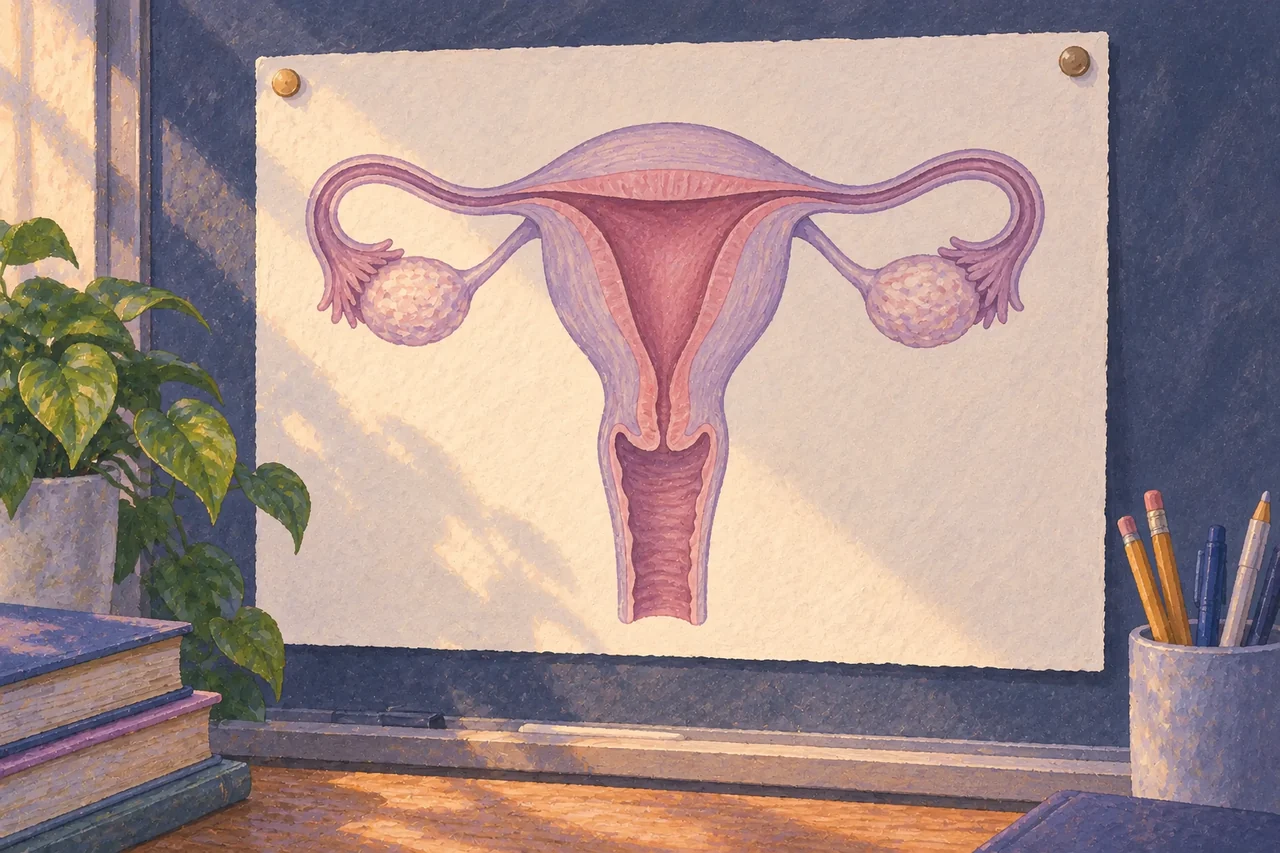
Reading the illustration
- Uterus: the broad shape in the upper center.
- Lining: the rose-colored inner border around its central space.
- Cervix: the narrow neck below the uterus.
- Vagina: the canal continuing downward from the cervix.
The ovaries are at the sides. This is a simplified view, not a diagram to measure from.
The short version, in order
- A lining builds up. Hormones help prepare the uterus, also called the womb, during the cycle.
- The lining sheds. When a pregnancy does not happen, that built-up lining is released.
- It leaves your body. The blood and tissue come out through the vagina. A pad catches them outside your body; a tampon absorbs blood inside the vagina.
You don’t need to memorize all the hormone names to understand what is happening. The main idea is that a period involves shedding a lining, rather than an injury that needs to close.
Why doesn’t it look like blood from a scraped knee?
Menstrual flow includes tissue as well as blood, so it does not always look like a thin, bright-red liquid. If your first question is about color, the brown period blood guide explains that separately. If you’re seeing clumps, read about period clots.
What do you actually need to do?
Start with getting a period product and somewhere comfortable to change it. There is no need to figure out your whole cycle on the first day. The first-pad guide walks through the practical part.
If you want to remember when bleeding started, a short private note is enough. You can learn how cycle days are counted when you’re ready.
Knowing the explanation doesn’t mean ignoring pain
Heavy bleeding or pain that keeps you from normal activities deserves medical attention. It is okay to understand periods and still need help with yours.
A question you can ask
Can you explain what’s happening in my body, and what signs mean I should get help?
Where this comes from
- Nemours KidsHealth: female reproductive system — uterus, lining, cervix and vaginal anatomy shown in the simplified illustration
- MedlinePlus: menstruation — where menstrual blood comes from and common period symptoms
Sources checked October 7, 2026. General education, not a diagnosis or personal medical advice. These organizations have not reviewed or endorsed this guide. Tell us about a correction.