
Do tampons expire? What to check before using an old one
Tampons have a shelf life, but there is no single expiry rule for every brand or product. Check the box and the maker’s current instructions, and skip a tampon with a torn, wet or dirty wrapper. A tampon found loose in an old bag is worth replacing rather than guessing about.
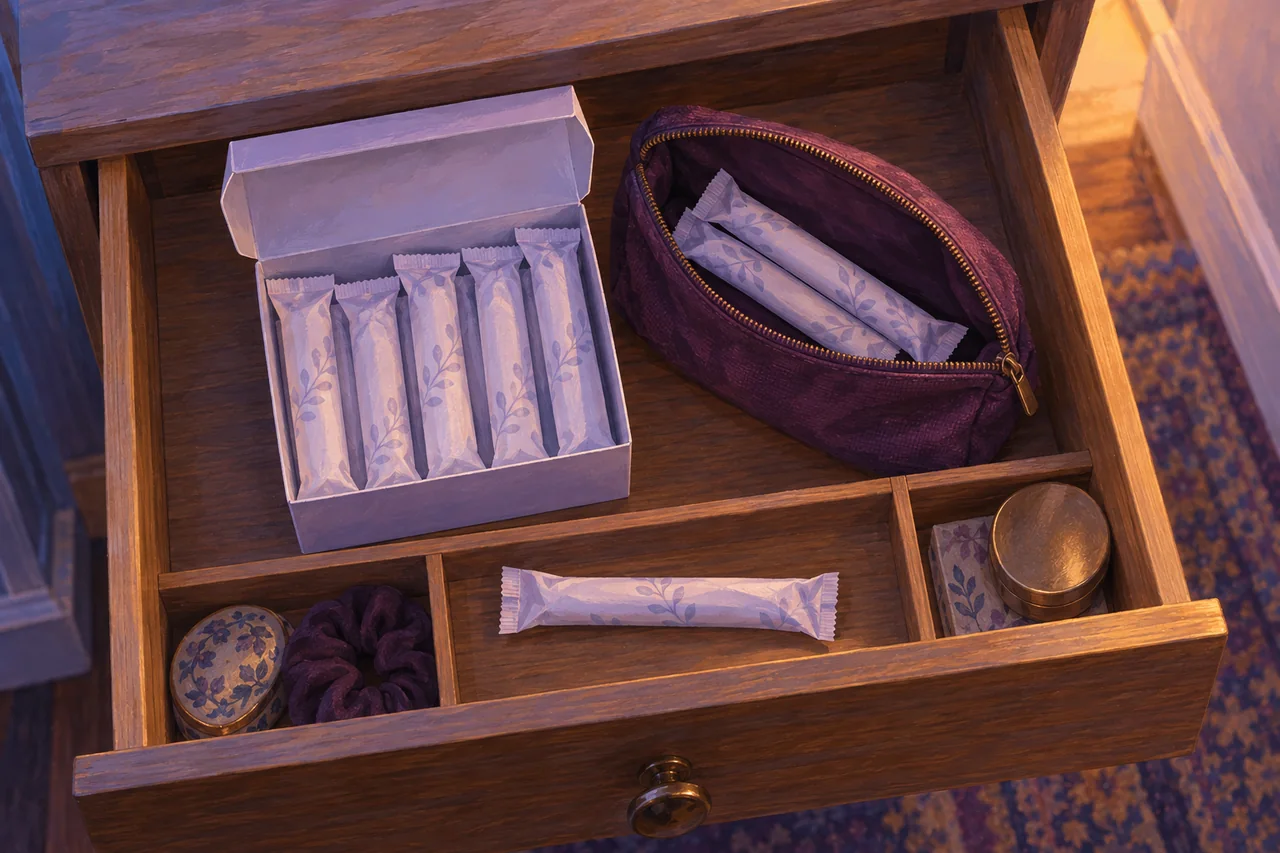
Check the box, the wrapper and the storage
Box: Can you identify the product and its shelf-life instructions?
Wrapper: Is it sealed, dry and undamaged?
Storage: Has it been kept protected from dampness and dirt?
If a date or batch code is confusing, keep the box and ask the manufacturer what it means. A number on a wrapper is not automatically an expiry date. If you cannot establish what you have, use a new, properly stored product.
What if there is no expiry date on the box?
Keep the brand, product name and batch code together when you check with the maker. A shelf-life figure for a different brand is not enough to date yours. You can use a new product or a pad while you find out; there is no need to make a guess in the bathroom.
Why do some pages say five years?
General advice often gives an approximate shelf life. The product’s own guidance can be more specific: Tampax currently lists three years for its Radiant and Compact Radiant tampons and five years for other Tampax lines. It describes these as quality shelf lives under proper storage, rather than one universal expiry date.
Those figures are examples for that manufacturer, not a rule to calculate for every tampon. The condition of the packaging and where it was kept still matter. Looking fine from the outside does not prove that an old or poorly stored tampon is clean inside.
What if I already used an old tampon?
Remove it and switch to a pad while you decide what to do next. Using an old tampon does not tell you that you have an infection. If you have irritation, pain, unusual discharge or another unexpected symptom, stop using tampons and contact a healthcare professional.
If you develop sudden fever, vomiting, diarrhea, a sunburn-like rash, dizziness or faintness during or soon after tampon use, get medical help immediately and tell a trusted adult. These can be signs of a serious illness; do not wait for every symptom to appear.
If you cannot remove the tampon, get prompt medical help. Do not insert another one or use tools to try to retrieve it; thestuck-tampon guide explains what to say.
A simple way to explain what happened
I used a tampon that may have been old or poorly stored. I put it in at ___ and removed it at ___. I’m noticing ___. What should I do?
A small restock habit for your school bag
Keep each tampon in its original wrapper inside a pouch. When you refill your kit, check the wrappers instead of leaving the same loose emergency tampon in the bottom of the bag. Store your spare box in a dry place away from splashes and persistent bathroom dampness.
Never wash or reuse a tampon. Shelf life is also separate from wear time: once inserted, change it every 4–8 hours, sooner if needed, and never leave the same one in longer than 8 hours. See thetampon timing guide for sleep planning.
Checking other supplies too? The pad shelf-life guide covers pads, while the school kit checklisthelps you replace what you used.
Where this comes from
- Tampax: storing tampons — manufacturer-specific shelf lives, dry storage and intact wrappers
- Cleveland Clinic: do tampons expire? — contamination may not be visible; irritation after use needs attention
- FDA: tampon safety — single use, wear time, unexpected symptoms and urgent warning signs
Sources checked October 28, 2026. General education, not a diagnosis or personal medical advice. These organizations have not reviewed or endorsed this guide. Tell us about a correction.