
How to clean a menstrual cup, at home and at school
Clean a reusable menstrual cup according to its own instructions each time you empty it, and sanitize it as directed before first use and between periods. Washing and boiling are different steps. There is no single boiling time that fits every cup.
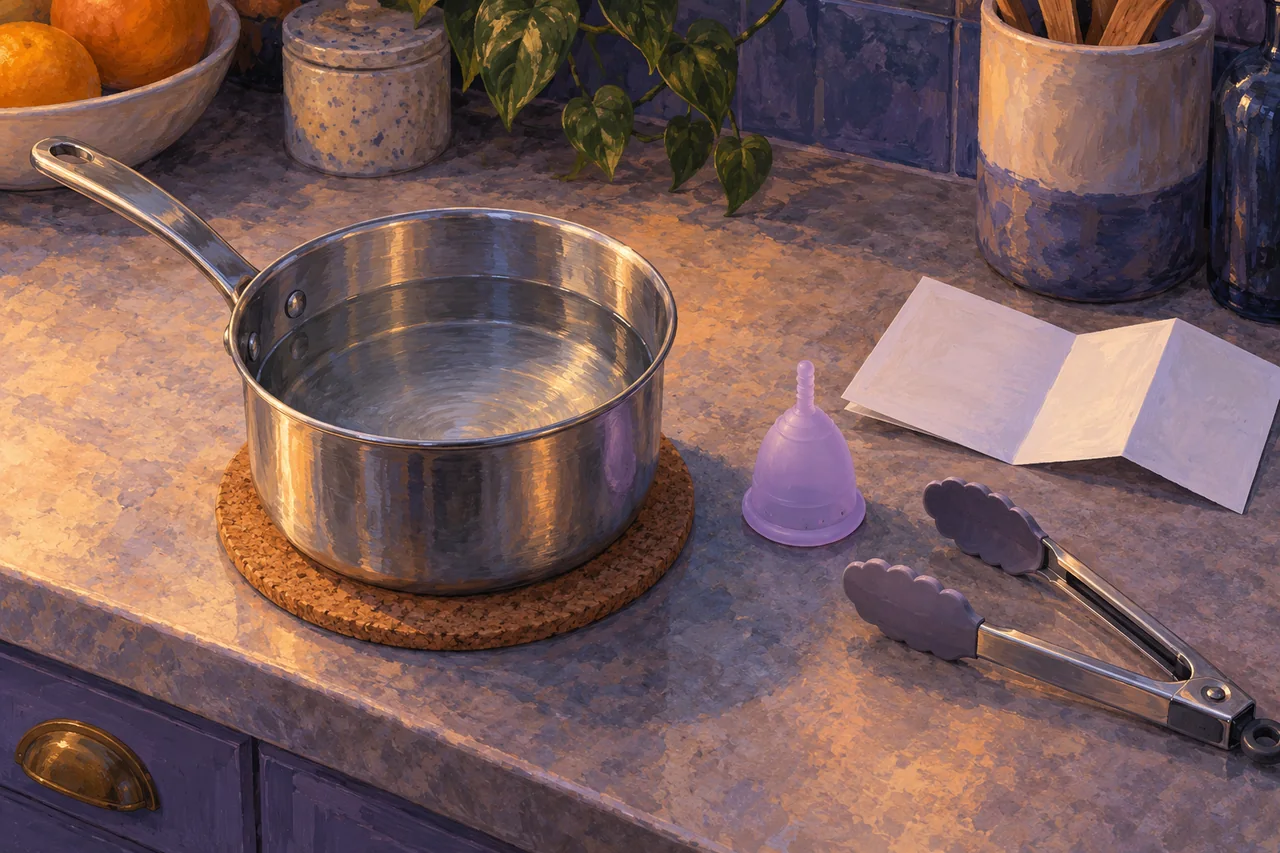
Make three separate plans
- Before your first use: find the manufacturer’s first-use preparation instructions.
- During your period: plan where you can wash your hands, empty the cup and clean it before reinserting.
- Between periods: follow the sanitizing method, let it dry fully and store it as directed.
Save the instructions or keep the leaflet in a drawer. You should not need to remember the details from a short video. If you are still choosing a product, start with what using a cup involves.
How to wash a menstrual cup during your period
Wash your hands before handling it and again afterward. Empty the blood into the toilet. Use clean water and the cleanser your manufacturer recommends, then rinse thoroughly. Check the rim and any small air holes for remaining material.
For example, Saalt instructs users to rinse with cold water first, wash with mild soap and water, rinse well and clear the air holes with water or a damp cloth. This example is not permission to use the same cleaner on every brand. Avoid experimenting with household cleaners or adding fragrance.
How long should you boil a menstrual cup?
Use the time printed for your cup. Saalt’s instructions specify 4–5 minutes, never more than seven, before first use and between cycles. They also say to keep the cup from touching the pot’s bottom. Other products may specify something different.
Read the whole method before heating water: the time, water amount and suitable equipment belong together. Use a timer, supervise the pot and let the cup cool before handling. Ask for help with boiling water if you need it. Do not improvise a microwave method unless your exact product permits it.
What if the school bathroom has no private sink?
Work out a plan before the day. A shared sink can make cup care inconvenient, and a locked bathroom is not a reason to exceed a wear limit.
- Ask whether a bathroom with a sink inside is available.
- Check your manufacturer’s instructions for care away from home.
- If you cannot clean it as required, use a familiar pad or period underwear instead. Pack a separate container to take the removed cup home for cleaning.
A private question at school
Is there a bathroom with a sink inside that I can use to manage my period product?
A small period kit gives you a backup without needing a completely different routine.
Does a stain mean my cup is still dirty?
A change in color and damage are different things. Saalt says some discoloration can happen over time, while tears or deteriorating silicone mean its cup needs replacing. Follow your own cup’s cleaning and inspection instructions. Do not add stronger cleaners just to make the color disappear.
Drying, storage and damage
Wondering how many years to keep the same cup? The cup and disc replacement guideseparates total lifespan from wear time, with product-specific examples.
After sanitizing, allow the cup to dry fully. Saalt specifies a breathable bag rather than an airtight container. Keep the storage bag clean too. If the cup is torn or the material is deteriorating, stop using it and follow the replacement instructions. Cleaning cannot repair damage.
If a cup is dropped somewhere dirty or you are unsure which cleaner touched it, put it aside and check the manufacturer’s guidance before reuse. A quick rinse is not a reason to assume it is ready.
Where this comes from
- CDC: menstrual hygiene — handwashing, regular cleaning and following product instructions
- Saalt: cup instructions — Saalt-specific washing, boiling, drying, storage and damaged-cup guidance
- American Academy of Pediatrics: period-product safety — washing after use and sanitizing between periods
Sources checked October 28, 2026. General education, not a diagnosis or personal medical advice. These organizations have not reviewed or endorsed this guide. Tell us about a correction.