
What is a menstrual cup, and how do you use one?
A menstrual cup is a flexible container worn inside the vagina to collect period blood. Most are reusable: you remove, empty and clean the cup before putting it back. It’s an option, not something you need to graduate to after pads.
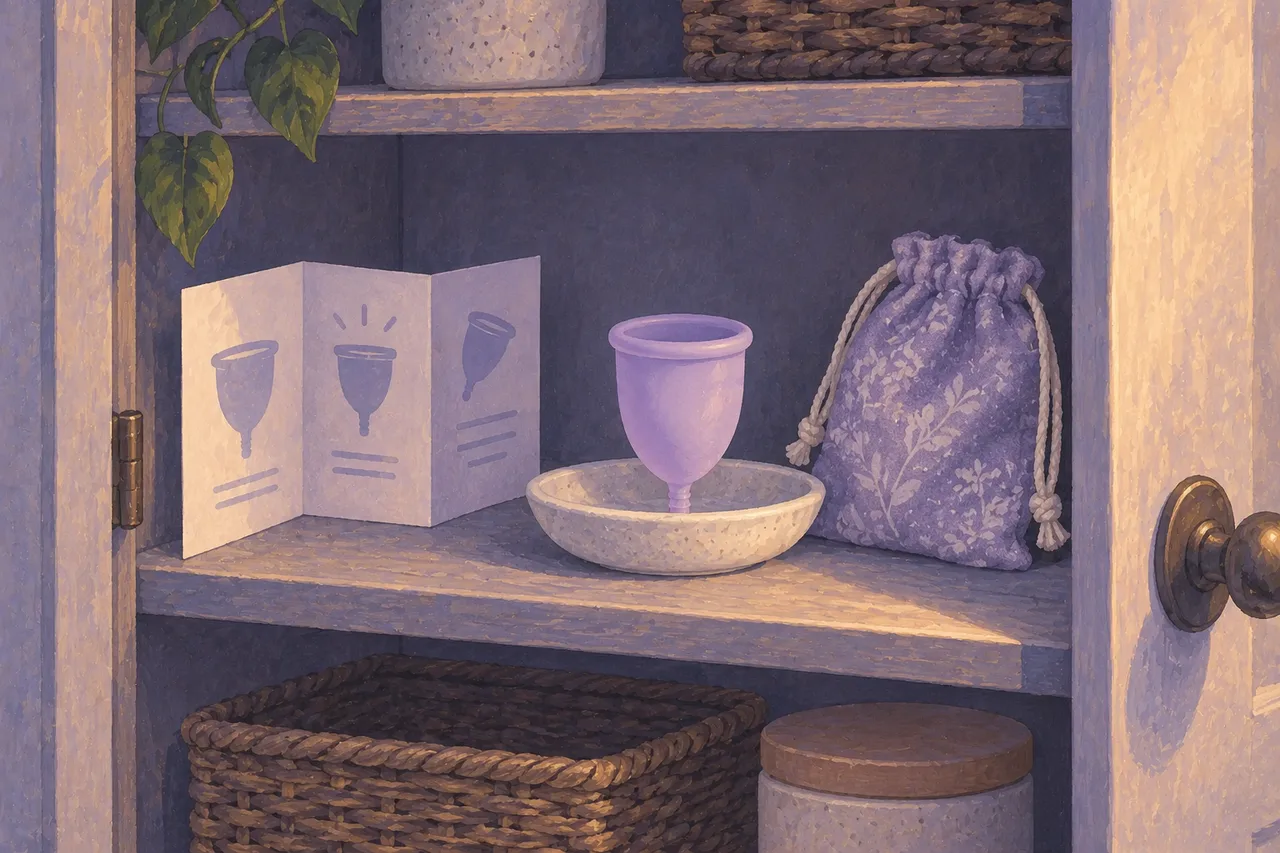
What does using a cup actually involve?
You fold it to put it in, let it open, and release its seal before taking it out. You will touch the cup and may get blood on your fingers. A private bathroom, clean hands and time to learn make the first attempt less rushed.
If that sounds like too much right now, pads or period underwear are still options. There is no deadline for trying an internal product.
How to use a menstrual cup for the first time
- Read your cup’s directions before starting. Check first-use cleaning, folding, removal and maximum wear time. Different designs need different handling.
- Prepare the cup and wash your hands. Follow its cleaning directions. Choose a comfortable position with your instructions within reach.
- Fold and insert gently. Use the fold shown in the package, slide it into the vagina, and follow the directions to let it open. Stop if insertion hurts; forcing it is not part of learning.
- Plan removal before you leave the bathroom. Set a private reminder based on the product’s limit. Empty sooner if full; a maximum is not a target.
- Release the seal to remove. For a conventional cup, pinch the base before gently easing it out. Do not yank on the stem. Empty into the toilet, clean as directed and wash your hands.
Many cups allow up to 12 hours, but follow your specific product’s shorter limit if it has one. Flow can mean emptying much sooner. See the cup-cleaning plan before relying on one for a school day.
Can you pee with a menstrual cup in?
Usually, yes. Pee leaves through the urethra, a different opening from the vagina. You do not need to remove a comfortable cup just to pee. If it causes pressure, pain or difficulty peeing, remove it and get medical advice if the problem continues. Do not push through discomfort to make a product work.
A first-try plan with an easy exit
- Try when you have time at home, rather than minutes before school.
- Keep a pad nearby so stopping does not leave you without a product.
- Keep the package instructions, including removal guidance.
- If you cannot remove the cup, ask a healthcare professional for help. Do not use tools or keep pulling painfully.
A question for a nurse or clinician
I’m interested in a menstrual cup, but I’m unsure about inserting and removing it. Can you explain what I should know?
When to stop and get help
Pain or ongoing irritation needs advice. Toxic shock syndrome is rare but can happen with cups: if you develop sudden fever, vomiting, a rash, dizziness, or feel very unwell, remove the cup if you can and get urgent medical help. Do not wait for every symptom or delay help while struggling to remove it.
Comparing shapes? Our cup-versus-disc guide explains the practical differences.
Where this comes from
- Planned Parenthood: using period products — following cup-specific folds, practice, pad backup and pain advice
- Cleveland Clinic: menstrual cups — what cups do, insertion and releasing the seal before removal
- American Academy of Pediatrics: period-product safety — cup hygiene, wear limits and rare toxic shock syndrome
- Saalt: using the bathroom with a cup — separate urinary and vaginal openings; a manufacturer's bathroom guidance
- NHS: toxic shock syndrome — urgent symptoms and removing a cup when unwell
Sources checked October 12, 2026. General education, not a diagnosis or personal medical advice. These organizations have not reviewed or endorsed this guide. Tell us about a correction.