
Can you pee with a tampon in?
Yes. You can pee with a tampon in and keep it in. Pee leaves through the urethra, while a tampon sits in the vagina. They are different openings, so you don’t need to remove a tampon just to pee.
Wet string? · Tampon slipping out? · Pooping? · Pain when you pee?
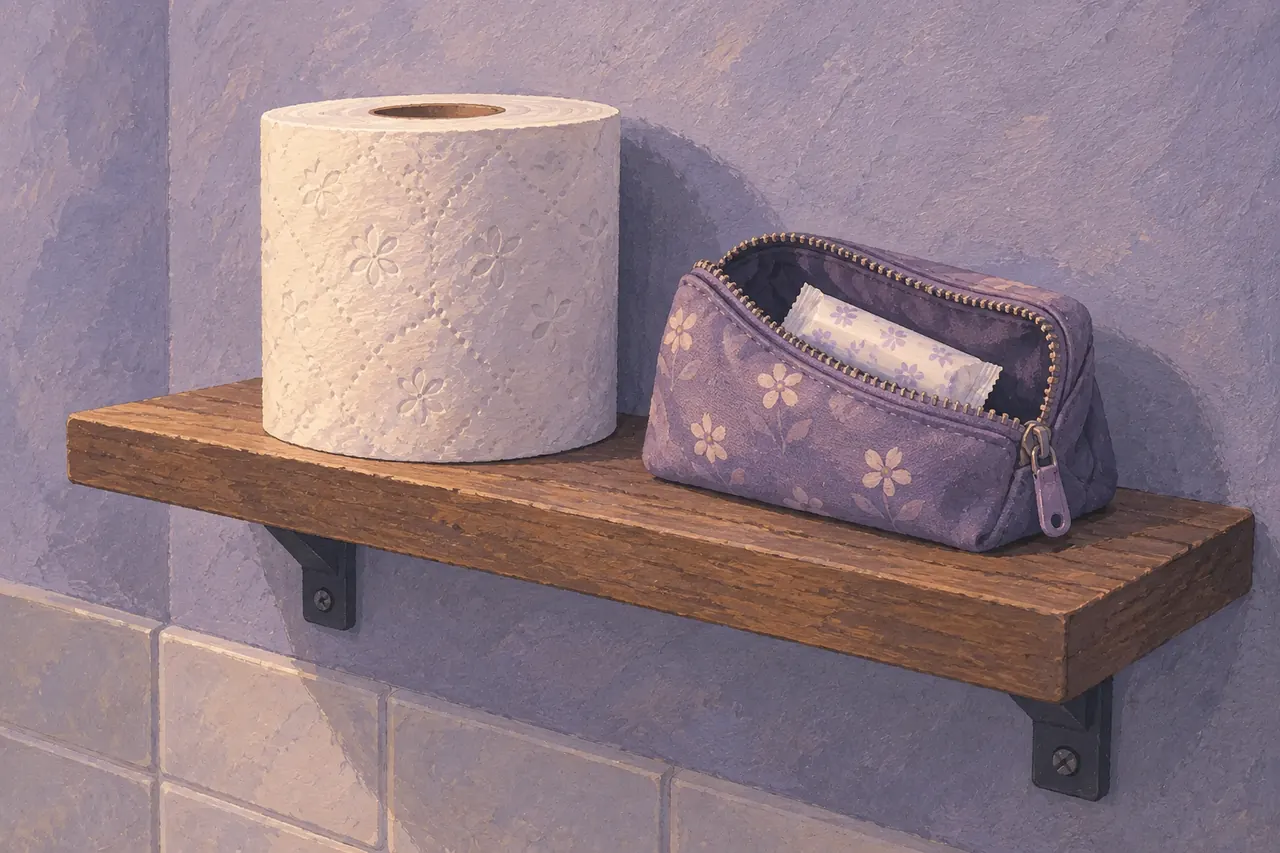
Two different jobs, two different openings
Urine: bladder → urethra → outside.
Period blood: uterus → vagina → outside.
A tampon is in the second route. It does not plug the opening you pee from.
It makes sense to wonder about this when nobody has explained the difference. You don’t need to hold your pee because you’re wearing a tampon.
My tampon gets wet when I pee. Do I need to change it?
A damp string is different from a tampon that has filled with blood. You can gently keep the string out of the urine stream. If it gets a little wet with pee, you can pat it dry with toilet paper or change the tampon if that feels more comfortable. Don’t cut off the string or pull it just to move it aside.
Quick bathroom check: a slightly wet string → pat it dry or change for comfort. A tampon due for a change → use a fresh one. A tampon that has slipped partly out → change it.
What if the tampon slips out during a bathroom visit?
Remove a partly displaced tampon and use a fresh one if you still need it. Don’t reuse one that has fallen into the toilet. You can use a pad instead. If this keeps happening or it feels uncomfortable, the tampon discomfort guide explains what to check and when to stop and ask for help.
Do I need a new tampon every time I pee?
No. A bathroom visit alone is not a reason to replace one. Decide from when you inserted it, whether it needs changing for flow, and whether it has slipped or become dirty. If you change it, remove the old tampon before inserting a fresh one. Use only one at a time.
Can you poop with a tampon in?
You can poop with a tampon in, too. Keep the string away from stool. If it gets dirty or the tampon slips partly out, change it. Wash your hands before and after changing a tampon.
What if it burns or hurts when I pee?
That is a different question from whether a tampon can stay in. Painful peeing can have other causes, including a urinary infection. Tell a trusted adult and get prompt medical advice, especially with fever or lower-belly or back pain. Don’t assume it is just a wet string. Stop using tampons if wearing one hurts.
A bathroom visit is a useful time check
Peeing doesn’t restart the tampon clock. Keep counting from when it went in and follow the 4–8-hour change guidance, never more than 8 hours. If it’s time for a fresh one anyway, this is a convenient opportunity.
You can make the decision simple: “Do I only need to pee, or is my tampon due for a change too?” Those are separate questions. For reminders and overnight examples, read how long to keep a tampon in.
If wearing a tampon hurts, stop using it and ask a healthcare professional for advice. Our first-time guide explains the basics; you can always use a pad instead. If it hurts when you sit or remove it, read what to do about an uncomfortable tampon.
Where this comes from
- Cleveland Clinic: common tampon questions — separate urinary and vaginal openings, strings, and bathroom use
- FDA: tampon safety — package directions, absorbency, wear limits, and symptoms requiring immediate care
- NHS: urinary tract infections — painful peeing and symptoms that need prompt medical advice
Sources checked October 28, 2026. General education, not a diagnosis or personal medical advice. These organizations have not reviewed or endorsed this guide. Tell us about a correction.