
Constipation before your period: what can help?
Constipation can happen before a period, but period timing does not prove what caused it. Hard, dry poop, painful pooping or feeling that you haven’t finished can all matter, even if you still go. Start with a manageable bathroom routine, and get help if it hurts, keeps returning or doesn’t improve.
Get medical help promptly if constipation comes with blood in your poop, vomiting, a swollen belly, constant belly pain or unexplained weight loss. Severe belly pain needs urgent care. Tell a trusted adult; don’t wait for your period to end before asking.
Why might it happen around your period?
Constipation is one possible premenstrual symptom. Other things can affect bowel habits too, including holding poop because the school bathroom feels uncomfortable, not getting enough fluids or fiber, medicines and some health conditions. A repeated pattern is useful information for a clinician, not a diagnosis you have to make yourself.
If the problem is loose or watery poop instead, use the period diarrhea guide. If it is mainly a full or swollen feeling, the bloating guide covers that different question.
Make room for the bathroom
Try to go when you feel the urge instead of putting it off until you get home. A little unhurried bathroom time after a meal can help you build a routine. It does not have to produce a bowel movement every time, and painful pooping is a reason to get support rather than keep pushing through.
If school bathrooms are part of the problem
I’m having trouble going to the bathroom and it’s uncomfortable. Can we work out a quieter place or time so I don’t keep holding it?
The nurse or another trusted staff member can help you ask for access. You don’t have to explain the details in front of classmates.
Keep food and water ordinary
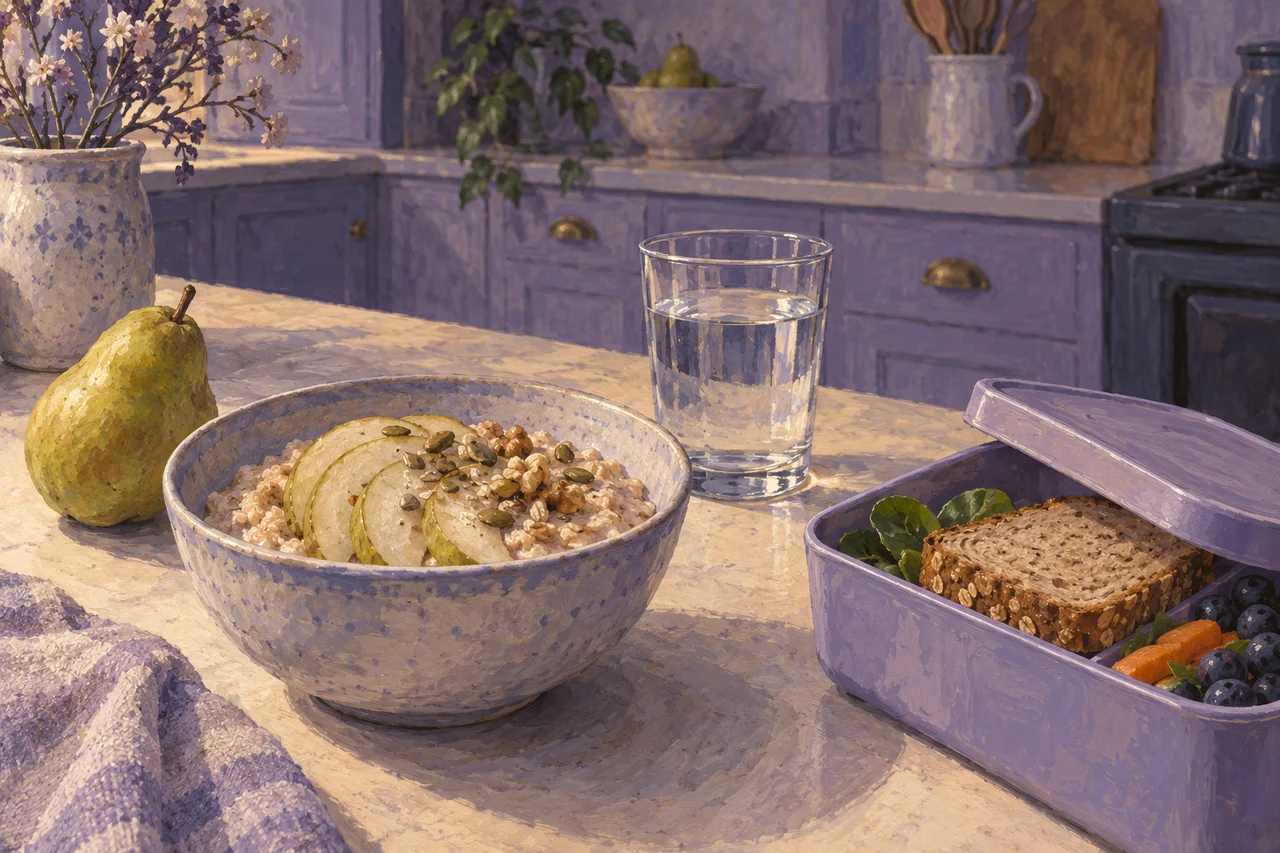
Keep drinking water and eating regularly. Foods with fiber, such as fruit, vegetables, oats, beans and whole-grain bread, can help stools become easier to pass. Choose things you already like and can access, and include fluids when adding fiber. You do not need a special “period detox,” a perfect meal plan or a huge serving of one food.
Don’t start laxatives or enemas on your own. Ask a clinician what is suitable for your age and symptoms. If you take a medicine or supplement, mention it; some, including iron supplements, can contribute to constipation. Don’t stop a prescribed medicine without talking to the prescriber.
What to tell a clinician
A short description is enough to start: when it began, whether poop is hard or painful, and how it affects school or sleep. Mention whether you are bleeding or waiting for your period, but include the bowel symptoms too. You don’t need photos or a detailed tracking project.
Arrange care if it keeps coming back, home measures aren’t helping, or it lasts more than two weeks. You can ask much sooner if it is painful or disrupting your day. The two-week point is not a rule to wait when you feel unwell.
Where this comes from
- Office on Women’s Health: premenstrual syndrome — constipation and other symptoms before a period
- NIDDK: constipation symptoms and causes in children — hard stools, holding, other causes and care thresholds
- NIDDK: treating constipation in children — fluids, fiber, bathroom routine and clinician-led medicines
Sources checked October 12, 2026. General education, not a diagnosis or personal medical advice. These organizations have not reviewed or endorsed this guide. Tell us about a correction.