
How to get period blood out of clothes
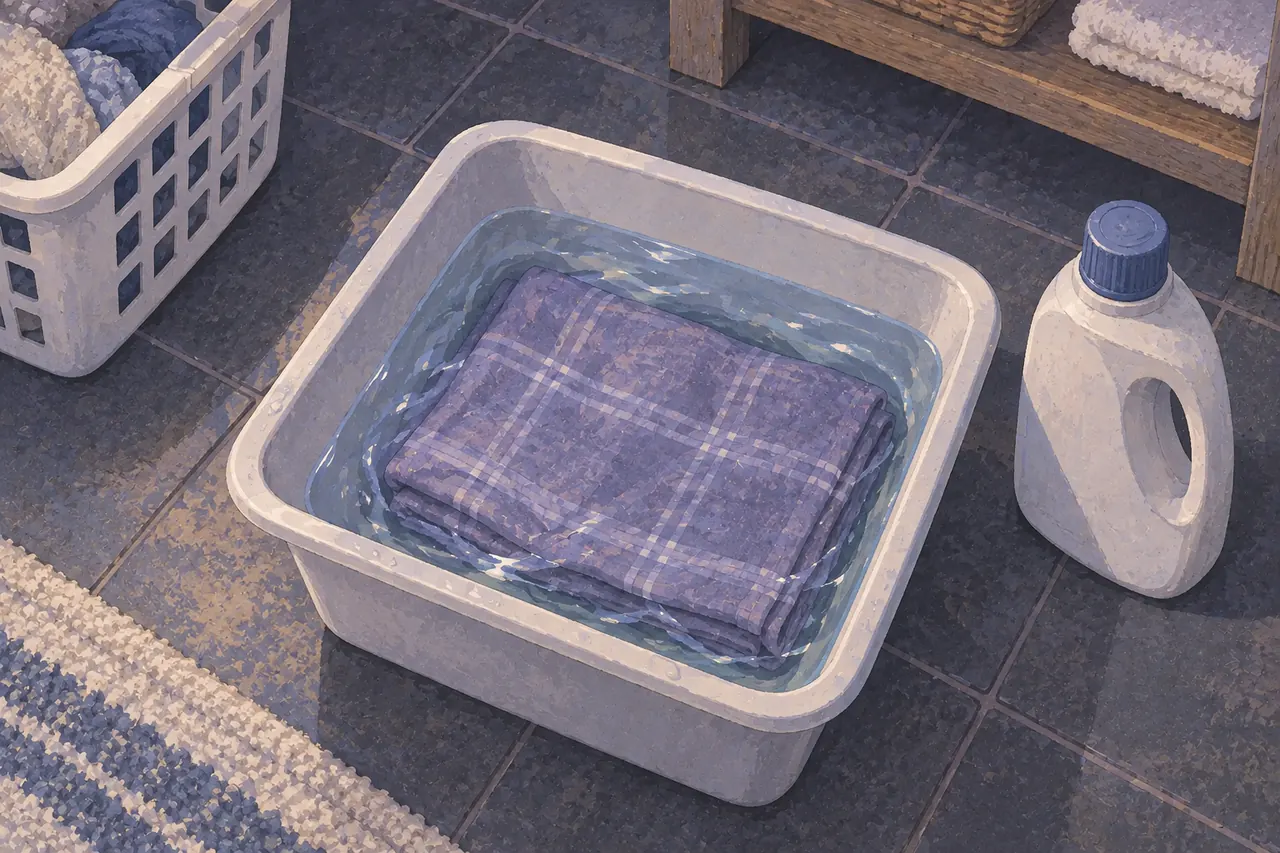
For washable fabric, start with cold water, then use a laundry detergent suitable for the fabric and follow the clothing label. Check the stain before drying: heat can set a remaining blood stain. You don’t need to throw the clothing away immediately.
If you’re still at school
Deal with your own comfort first: a fresh period product, clean underwear if you have it, and a chance to change clothes. You don’t have to start a full laundry project in a school bathroom.
If it’s practical, rinse a washable stained item with cold water. Otherwise, put it in a bag until you can treat it at home. A sweater around your waist is an optional way to cover a mark while you get help, not something you owe the people around you.
Ask for a change of clothes
I have a period stain on my clothes. Is there a spare pair I can borrow or somewhere private I can change?
Start with the fabric
Which stain-removal route should I use?
Check the care label before adding water or a cleaning product. Clothes, absorbent period underwear and a mattress don’t all need the same treatment.
- 1. Is it washable?
Read the label. Dry-clean-only, delicate and non-removable fabrics need a different route.
- 2. Fresh or already dry?
Cold water is the starting point for ordinary washable fabric. A dried mark may need a label-approved pretreatment or soak.
- 3. Is the treatment suitable?
Follow the fabric and detergent labels. Test a stain product on a hidden area first; stop if the color or texture changes.
- 4. Check before heat
Look at the mark after washing. If it remains, repeat a suitable treatment before tumble-drying or ironing.
Fresh stain on ordinary washable underwear, jeans or sheets
- Rinse the stained part with cold water.
- Use a fabric-safe laundry detergent as its directions allow.
- Wash following the care label, using a cold-water blood-stain routine.
- Check before drying. Repeat a suitable treatment if the mark is still there.
Dried stain on ordinary washable fabric
Start with cold water, then follow a suitable detergent’s pretreatment or soaking directions. Avoid inventing a soak time or mixing extra cleaning products. Wash, check and repeat if the fabric allows. An old stain may take more than one attempt and may not come out completely.
Delicate or dry-clean-only clothing
Don’t copy the jeans-and-sheets routine onto silk, wool or a dry-clean-only item. Follow its care label. If it calls for dry cleaning, tell the cleaner it is a blood stain before treatment; ask a trusted adult to help if needed. If you’re unsure whether water is safe, pause rather than soaking it.
Period underwear
Use that pair’s own care instructions. Stain removers, soaking and drying methods that suit ordinary fabric may not suit its absorbent layers. Our period-underwear washing guideexplains what to check.
Mattress, sofa or another non-removable fabric
Check the maker’s cleaning directions first. A zipper does not mean a mattress cover is removable. Some foam must not get wet. If water-based spot cleaning is allowed, blot gently with a clean cloth and a little cold water; don’t soak the filling. Test any suitable cleaning product in a hidden area, and let the item dry fully. For unknown fabrics or a persistent stain, ask for help rather than adding stronger cleaners.
Keep it simple: no hot water on the blood stain, no dryer heat while a mark remains, and no mixing cleaning chemicals. Your comfort comes before the laundry; it’s okay to change clothes and treat the fabric later.
A leak isn’t a verdict on your ability to manage periods. Once the laundry is handled, check whether a spare product or a different change opportunity would make the next school day easier.
Where this comes from
- Casper: mattress care — check the particular mattress instructions; a zippered cover is not necessarily removable
- Tempur-Pedic: spill cleaning — some mattress materials must not get wet; follow the maker’s directions
- University of Georgia Extension: blood-stain care — fabric care, cold water and testing a treatment on an inconspicuous area
- Clorox: spot-treating a mattress — minimal moisture, blotting and drying fully; not a product endorsement
- Tide: removing blood stains — cold-water treatment, clothing labels and checking before drying; not a product endorsement
Sources checked October 28, 2026. General education, not a diagnosis or personal medical advice. These organizations have not reviewed or endorsed this guide. Tell us about a correction.