
Camping on your period: a practical plan for your trip
You can go camping on your period. Bring products you already feel comfortable using, find out where you can wash your hands and change, and carry a separate bag for used supplies when there is no bin. You don’t need to try a tampon or cup just for the trip.
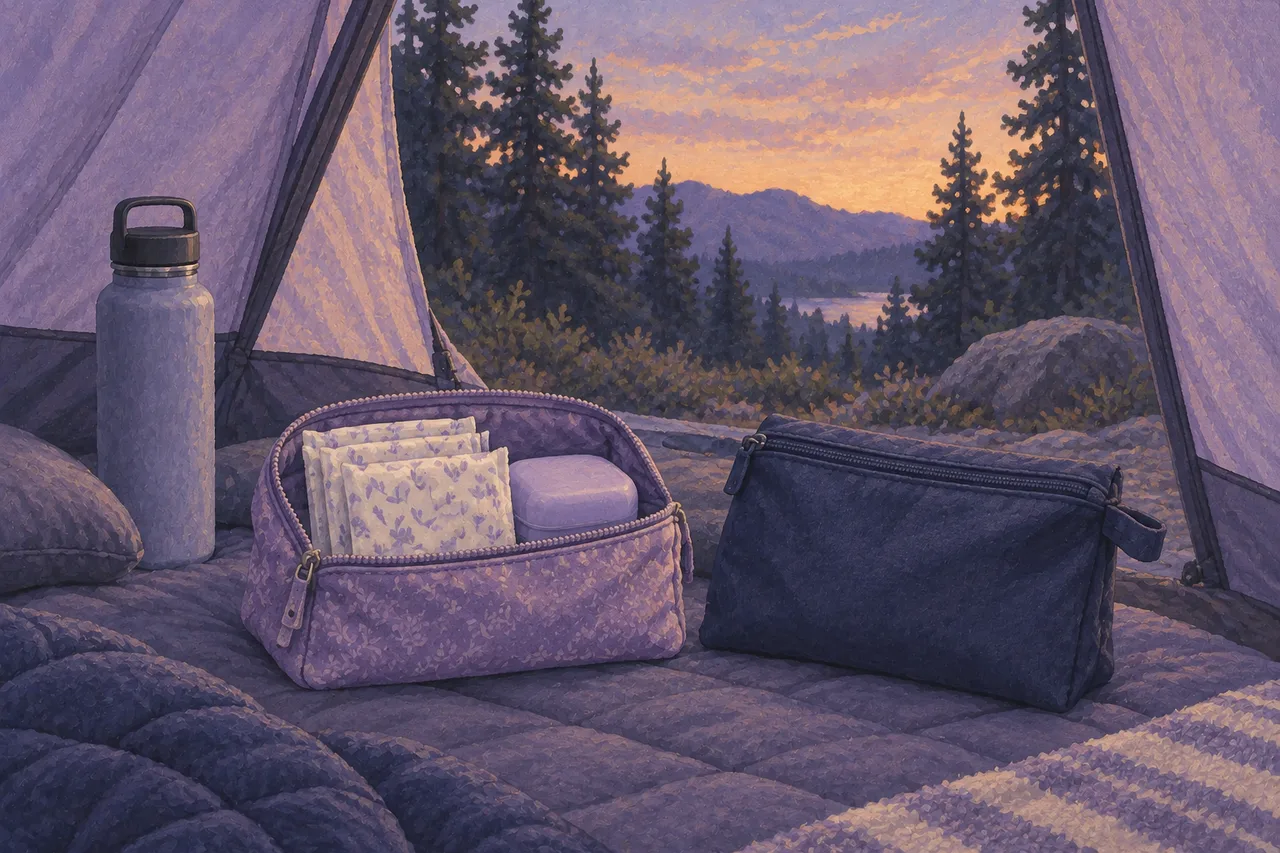
Ask these three questions before you leave
- Where can I change? Ask about toilets, privacy and the longest stretch without a bathroom stop.
- Where can I wash my hands? Know where soap and clean water are available. Do not assume every campsite has a sink.
- Where does waste go? Ask about designated disposal and the campsite’s storage rules. A used pad does not belong in a toilet, on the trail or buried in the ground.
For a school or organized camp, a trip leader can help plan access without announcing your period to the group.
A private question for the trip leader
I might have my period on this trip. Where can I wash my hands, change products and put the used ones?
Pack a clean pouch and a separate waste pouch
- Clean supplies: familiar pads or tampons, enough for your usual changes plus spares, toilet paper and spare underwear.
- Handwashing: soap and access to clean water. Plan this with the leader if water will be limited.
- Used supplies: a sturdy sealable bag inside an opaque outer bag, kept separate from clean products. A second bag for used underwear can help too.
Keep the clean pouch within reach during the day. A useful kit does not need special packaging or a new product. Start with our basic period-kit checklist and add the trip-specific disposal plan.
What if there is no bin?
Wrap the used product and seal it in your waste bag until you can use proper waste disposal. Pack out pads, tampons, applicators and wrappers; do not bury or burn them. Follow the campsite or trip leader’s rules for storing waste securely, including wildlife precautions.
The pad-disposal guide covers wrapping. Keep the waste bag away from clean supplies, and wash your hands before and after changing.
Can you bury a biodegradable tampon?
Pack it out with your other used supplies. A biodegradable label does not change the campsite disposal plan. Used pads, tampons, applicators and wrappers belong in your waste bag until appropriate disposal is available, not under a rock or in a campfire.
If you run short of bags or products, tell the leader before heading away from the facilities. That is a supply problem to solve together, not a reason to leave waste behind or keep the same product on longer.
Plan changes around the day, not just the destination
During the day, change a pad about every 3–4 hours, sooner if wet, full or uncomfortable. Change before a long stretch without a bathroom if that fits your routine, and tell the leader when you need another stop.
For a tampon, follow the package, use the lowest absorbency needed and change every 4–8 hours, never longer than eight. A long hike or bus ride does not extend that limit. Our tampon timing guide covers sleep too.
If you feel unwell on the trip
Tell the leader if pain keeps you from the activity or you are repeatedly soaking a pad in an hour or less, and get medical advice promptly. If you feel faint, very weak or have severe pain, ask for urgent medical help now. You do not need to keep walking to avoid holding up the group.
For ordinary activity decisions, see moving and resting on your period.
For the journey itself, use the flight, bus and school-trip plan to keep supplies within reach and plan changes around bathroom access.
Where this comes from
- REI: backpacking with your period — clean and used supply bags, handwashing and packing out disposable products
- FDA: tampon safety — handwashing, package directions, absorbency and wear limits
- Nemours KidsHealth: changing pads — regular daytime changes rather than keeping one pad on all day
- Nemours KidsHealth: All About Periods — period activity and symptoms needing medical advice
Sources checked October 28, 2026. General education, not a diagnosis or personal medical advice. These organizations have not reviewed or endorsed this guide. Tell us about a correction.