A period travel kit and bathroom plan for long journeys
A useful period travel kit stays with you, not in a bag you cannot reach. Pack familiar products, spare underwear and a separate bag for used clothes, then plan bathroom access before a long flight, bus ride or school trip. Delays do not extend a product’s wear limit.
Need help now? If you feel faint, very weak or have severe pain, tell crew or the trip leader and get urgent medical help. If someone has fainted with bleeding or is too weak to stand, call 911 in the U.S. or have crew arrange emergency help.
Split the packing into two places
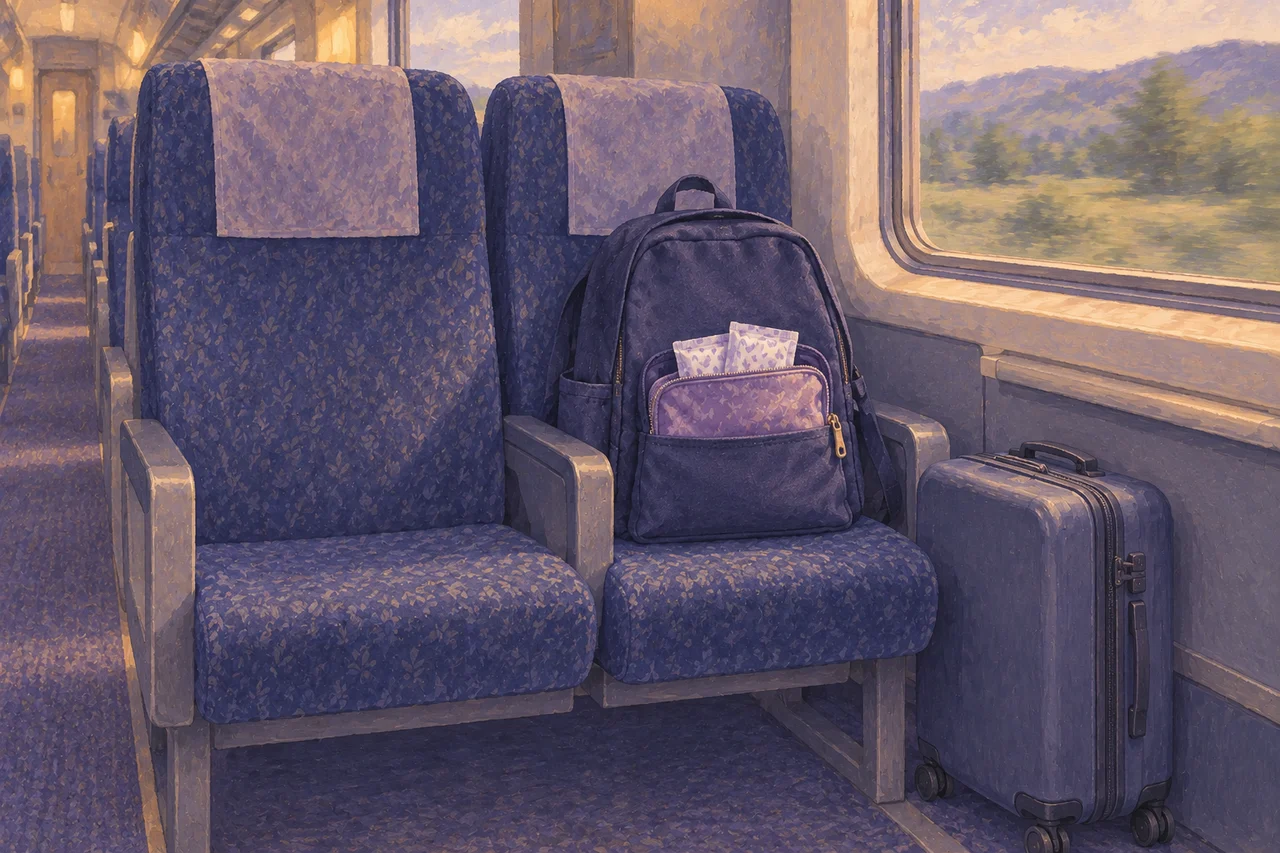
- Within reach: a small pouch with products for the journey plus spares, clean underwear and a separate bag for used clothes or temporarily holding wrapped waste.
- In your main bag: the rest of your supplies for the visit. Do not put every pad or tampon in checked luggage or a bus luggage compartment.
A pouch you already own is enough. Keep clean products in their wrappers and away from damp or used things. Choose familiar supplies rather than testing a new product for the first time in a cramped bathroom.
Ask about the longest gap between bathrooms
For a bus or organized school trip, ask the leader when stops are planned and what to do if you need one sooner. On a flight or train, notice where the bathroom is and ask crew for help if access is unavailable. Crew instructions still apply; do not wait until the last possible minute to mention a problem.
Before the trip
I need regular bathroom breaks on this journey. What is the longest stretch without a stop, and who should I tell if I need help sooner?
You can ask privately without explaining your period to the group. If the planned gap will not work with your changing needs, raise it before leaving so the adult or organizer can help make a realistic plan.
Make a timing plan that survives a delay
During the day, change a pad about every 3–4 hours, sooner if it is wet, full or uncomfortable. Use a bathroom before boarding when you need a change, rather than assuming another chance will appear immediately.
If you use tampons, follow the package and use the lowest absorbency needed. Change every 4–8 hours, never longer than eight. A bigger absorbency is not a way to stretch the journey. Count actual elapsed time, including time before you boarded and any sleep; a time-zone change does not restart the clock. A private elapsed-time reminder may help.
If you cannot confidently plan tampon changes, consider a familiar external product and a bathroom plan that still meets its changing needs. Our tampon timing guide covers forgotten changes and overnight wear.
Use the bathroom’s disposal system
Wash your hands before and after changing. Put wrapped disposable products in the designated waste bin, never the toilet. If a bin is missing, ask where to dispose of them and keep wrapped waste in a separate sealable bag temporarily. Do not mix it with fresh products.
Keep the next product in your pouch rather than laying everything on a shared surface. For a destination with limited water and waste facilities, use the separate camping plan.
If you leak or feel unwell in transit
Ask for a bathroom and help accessing spare clothes. You do not need to wait until the destination to tell a trusted adult you need support. If you soak a pad in an hour or less, get medical advice promptly.
For the destination, see staying overnight at someone else’s home. Restock your small pouch after using it so the return journey is covered too.
Where this comes from
- Nemours KidsHealth: changing pads — daytime changes and carrying products in a pouch
- FDA: tampon safety — handwashing, package directions, lowest needed absorbency and wear limits
- Nemours KidsHealth: period supplies — product choice, pads and disposal
- Nemours KidsHealth: All About Periods — very heavy bleeding and symptoms needing medical advice
- Seattle Children’s: vaginal bleeding — urgent help for fainting or being too weak to stand
Sources checked October 12, 2026. General education, not a diagnosis or personal medical advice. These organizations have not reviewed or endorsed this guide. Tell us about a correction.